
Article Summary:
Flow control valves e pressure control valves are both fundamental to hydraulic and pneumatic systems, but their misconceptions or misuse are frequently observed.
This article describes the different functions of these valves, their operating principles, the system’s role, and the way they are selected. The aggregate literature consistently advocates that flow control valves regulate the speed of the actuator by controlling the flow rate, while pressure control valves promote and maintain the system by managing the pressure levels. Understanding this difference is crucial to the efficiency, safety, energy consumption, and long-term dependability of industrial applications.
Introduction: Why Flow and Pressure Control Matter in Fluid Power Systems
Today, modern hydraulics and pneumatic systems require precise control of motion and force. Whether the application involves injection machines, extrusion machines, equipment for construction, or automated production, the functionality of the entire system is reliant on the accurate management of fluid flow and pressure. Two categories of valves have the greatest role in this control: the flow control valve and the pressure control valve.
This article provides a comprehensive, structured comparison that aggregates the best practices of top-ranked resources in the industry, while also expanding on them to provide a more extensive system-level understanding and practical application scenarios.
What Is a Flow Control Valve?
A flow control valve is intended to regulate the volume of fluid flowing in a hydraulic or pneumatic system. By adjusting the volume of fluid passing through a particular point over a given period of time, the valve has the direct effect of altering the speed of the actuator, the length of the cycle, and the smoothness of motion.
Core Function of a Flow Control Valve
The primary purpose of a flow control valve is to regulate speed. In a hydraulic chamber, the speed of the piston is related to the volume of water flowing in or out of the chamber. By adjusting the controller that controls the flow, operators can precisely regulate the movement without altering the output of the pump or the pressure of the system.
In hydraulic books that are leading in industry, the concept of flow control is described as a motion control component, rather than a force control component. This distinction is important for the proper design of a system.
Common Types of Flow Control Valves
Controls overflows are available in multiple configurations, each designed for a specific system purpose:
Needle valves are simple, manually-operated flow restrictions that are adjustable.
Throttle valves – Base orifice-based controllers of flow.
Pressure-compensated flow control valves – Constant flow is maintained despite pressure changes.
Flow dividers and priority switches – Divide or prioritize the flow to multiple effectors.
Among these, pressure-compensated flow control valves are commonly utilized in industrial machinery, as they consistently provide a speed that is proportional to the pressure.
Typical Applications of Flow Control Valves
Controlling the flow is typically accomplished with a flow control valve.
Cylinders with hydraulics for speed regulation
Pneumatic devices in automatic sequences
conveyor systems
Extrusion and molding machines
Machines with a smooth feed rate requirement
In all of these instances, the objective is not to reduce the force applied but to ensure reproducible and predictable motion.
Want real examples of how flow control improves energy efficiency and motion stability? Read Precisione in movimento.

What Is a Pressure Control Valve?
A pressure control valve is intended to regulate, limit, or maintain the pressure of a fluid system. Unlike valves that control flow, pressure control valves don’t have a direct impact on speed; instead, they safeguard components and ensure a safe, consistent operation.
For a deeper breakdown of flow control valve types and sizing, see our flow control valves guide.
Core Function of a Pressure Control Valve
Pressure control valves are responsible for regulating the pressure of the system by responding to the force of the fluid. When pressure reaches a pre-programmed threshold, the valve will open, close, or alter its flow direction to direct or block the fluid.
Classical hydraulics theory supposes that pressure control valves are analogous to force control components. They define the maximum amount of cargo that can be safely transported and avoid mechanical or structural failure.
Common Types of Pressure Control Valves
Pressure control valves are composed of multiple specialized parts.
Pressure relief valves – protect the system from overpressure (see valvola di sovrapressione idraulica).
Pressure-reducing valves -stabilize downstream branch circuits(see pressure relief valve vs pressure reducing valve).
Sequencing valves – A mechanism for controlling the order in which operations are performed based on pressure thresholds.
Compensating valves – Avoid the motion caused by loads.
Unloading valves – Reduce the energy expenditure of pumps by unloading them.
Each type has a distinct purpose, but all have the same general goal of dealing with pressure instead of regulating flow.
Typical Applications of Pressure Control Valves
Pressure control valves are essential for:
hydraulic power units
powerful presses
Storing systems
Lifting and holding applications
Safe industrial machinery
In these configurations, controlling pressure is crucial to safety, efficiency, and standards compliance.
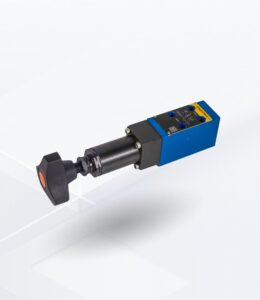
Flow Control Valve vs Pressure Control Valve: Core Differences
The most effective way to understand the difference between a flow control valve and a pressure control valve is to compare their roles within a system.
Comparison Table
| Aspect | Valvola di controllo del flusso | Valvola di controllo della pressione |
| Primary function | Regulates flow rate | Regulates pressure |
| Main control objective | Speed and motion | Force and safety |
| Controlled parameter | Flow (L/min, GPM, CFM) | Pressure (bar, PSI) |
| Typical adjustment method | Orifice or compensation mechanism | Spring force or pilot pressure |
| Effect on the actuator | Changes speed | Changes force capability |
| Safety role | Limited | Critical |
| Energy efficiency impact | Indirect | Direct |
This distinction is consistently emphasized in leading manufacturer manuals and engineering references.
need the adjustment procedure and safety checklist? See: how to set and adjust a hydraulic pressure relief valve.
How Flow and Pressure Interact in Real Systems?
Despite the fact that flow control valves and pressure control valves have different purposes, flow and pressure are intrinsically linked in practice. Flow causes motion, while pressure increases as a result of the load’s resistance.
For instance, increasing the flow rate into a cylinder increases the speed. If the volume of the load increases, the pressure will also increase to match the load. A pressure relief valve prevents the pressure from reaching dangerous levels, while a flow control valve maintains a consistent flow.
Understanding this interaction is often difficult; this is problematic in the design of the system, for example, trying to regulate speed with pressure relief valves or using flow limitations to hold load.
Selection Criteria: When to Use Each Valve
- When to employ a flow controller
A flow control valve is relevant when:
The speed of the actuator must be variable.
Constant cycle time is essential.
Smooth motion is essential
The pressure on the load is different during use.
In manufacturing systems, pressure-compensated designs are typically employed for accuracy and consistency.
- When to Activate the Pressure Control Valve
A pressure regulating valve is imperative when:
Extra pressure is needed to protect the structure.
Loads should be limited or ordered in a sequence.
System safety is of the utmost importance
Energy efficiency must be increased
Many hydraulic systems have multiple pressure-regulating valves that are combined.
Common Misconceptions
A common misconception is that decreasing flow will automatically lead to a decrease in pressure. In practice, pressure is influenced by the load of resistance, not just by flow.
Another common misconception is that flow control valves are safety devices. While they affect the behavior of the system, they cannot consistently prevent overpressure from occurring.
Correcting these misconceptions is crucial to both the design and the maintenance of the system.
Industry Application Examples
In extrusion machines, flow control valves control the auxiliary motions and position, while pressure control valves prevent the hydraulic system from being overburdened by the resistance of the material.
In automated manufacturing lines, pressure control valves that are pneumatic ensure the motion of the actuator is smooth, while relief valves and pressure regulators are used to maintain safe conditions.
These examples show why flow control valves and pressure control valves are separate entities rather than substitutes.
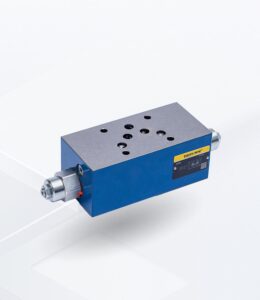
Maintenance and Reliability Considerations
- Maintenance Ideas for Controlling Flows with Valves
Flow control valves control the speed of the actuator by regulating the volume of fluid flowing through it. Their capabilities are highly dependent on the presence of dirt and wear.
Maintenance Points of Key Importance
Fluid cleanliness: polluted hydraulic oil is the most frequent cause of stuck or erratic flow control. Constant monitoring of the water’s quality and oil is crucial.
Orifice and spool surveying: Small flow diameters are susceptible to blockage; periodically, the motion of the actuator is observed in order to prevent unstable behavior.
Seal condition: A hardened or worn seal can lead to internal spillage, which can adversely affect the accuracy of flow.
Adjustment verification: Proportional or manual settings should be scrutinized frequently to prevent deviation over time.
Robustness Exposure
Sensitivity to the contamination of particles
The gradual deterioration of performance caused by erosion.
Lowered accuracy at different temperatures if the viscosity of the substance changes.
- Maintenance Ideas for Pressure Control Valves
Pressure control valves (such as relief valves, reducing valves, and sequence valves) are responsible for protecting systems from pressure overload and maintaining a consistent operating pressure.
Maintenance Points of Key Importance
Spring and pilot mechanisms: Corruption or fatigue can change the pressure settings.
Condition of the seat and poppet: Wear or other debris can impede the proper seal, which can lead to pressure creep or chatter.
Pressure calibration: Vessels should be tested and recalibrated periodically to ensure the accuracy of the setpoint.
Leakage detection: Internal or external leaking can be indicative of seal wear or surface damage.
Robustness Exposure
Pressure fluctuations due to faulty springs or flap designs
Safety risks if the relief valves fail to open at the correct pressure.
Increased pressure losses lead to an increase in heat generation.
Future Trends in Valve Technology
With the increasing prevalence of electro-hydraulic and intelligent fluid power systems, both flow control valves and pressure control valves are being increasingly combined with sensors and electronic controls. These technologies facilitate real-time alteration, diagnostics, and preemptive maintenance.
Despite these improvements, the distinction between flow control and pressure control remains the same.
Domande frequenti (FAQ)
What is the main difference between a flow control valve and a pressure control valve?
A flow control valve controls the flow rate of fluid to control speed, while a pressure control valve controls the pressure of the system to control force and ensure safety.
Can a pressure-regulating valve function as a flow control?
A flow controller that is positioned between the system’s pressure-regulating components may lead to a decrease in pressure, but it does not actively limit or regulate the pressure of the system.
Is a pressure relief valve a form of pressure regulation?
Yes, a pressure relief valve is a common form of pressure control that is used to prevent overpressure.
Does a hydraulic system require both openings?
Many industrial systems have both pressure and flow control valves that are stable, efficient, and safe.
When is the most appropriate time to utilize a pressure-compensated flow control valve?
Pressure-compensated flow control valves are beneficial when load pressure changes, and a consistent speed of actuation is necessary.
Conclusione
The distinction between a flow control valve and a pressure control valve is based on their primary goals of control. Controls over the flow rate and speed are called flow control valves, while pressure control valves are responsible for regulating the force and protecting the system. Understanding this difference is crucial to creating effective, efficient, and safe fluid power systems in modern industrial settings.
Troubleshooting unstable pressure, overheating, or pressure drop? Start here: hydraulic pressure control valve real-world problems.