
Author: Michael Qiu, Hydraulic Systems Engineer, Rekith Hydraulics
Quick Navigation:
- What Are Proportional and Directional Valves?
- Core Function Comparison (Control Precision, Response Time, Energy Efficiency)
- Case Study: Upgrading a Mobile Hydraulic System
- How to Choose the Right Valve for Your Application
- Frequently Asked Questions (FAQ)
Introduction: What’s Driving Modern Hydraulic Design?
With the rise of smart manufacturing and high-precision automation, hydraulic system design is facing growing demands for precise control, energy savings, and compact integration. Valves are core control components in hydraulic circuits, and their selection directly determines system efficiency and performance. This article provides an in-depth comparison of proportional and directional valves, supported by ISO standards and engineering field cases, to help you make informed choices.
Hydraulic Valve Basics: Control Logic & Standards
Hydraulic valves serve three core control functions:
- Flow Control
- Pressure Regulation
- Directional Switching
According to ISO 1219 and ISO 4413, proper valve selection can significantly improve system reliability and lifespan.
Directional Valves: Simple, Direct Control

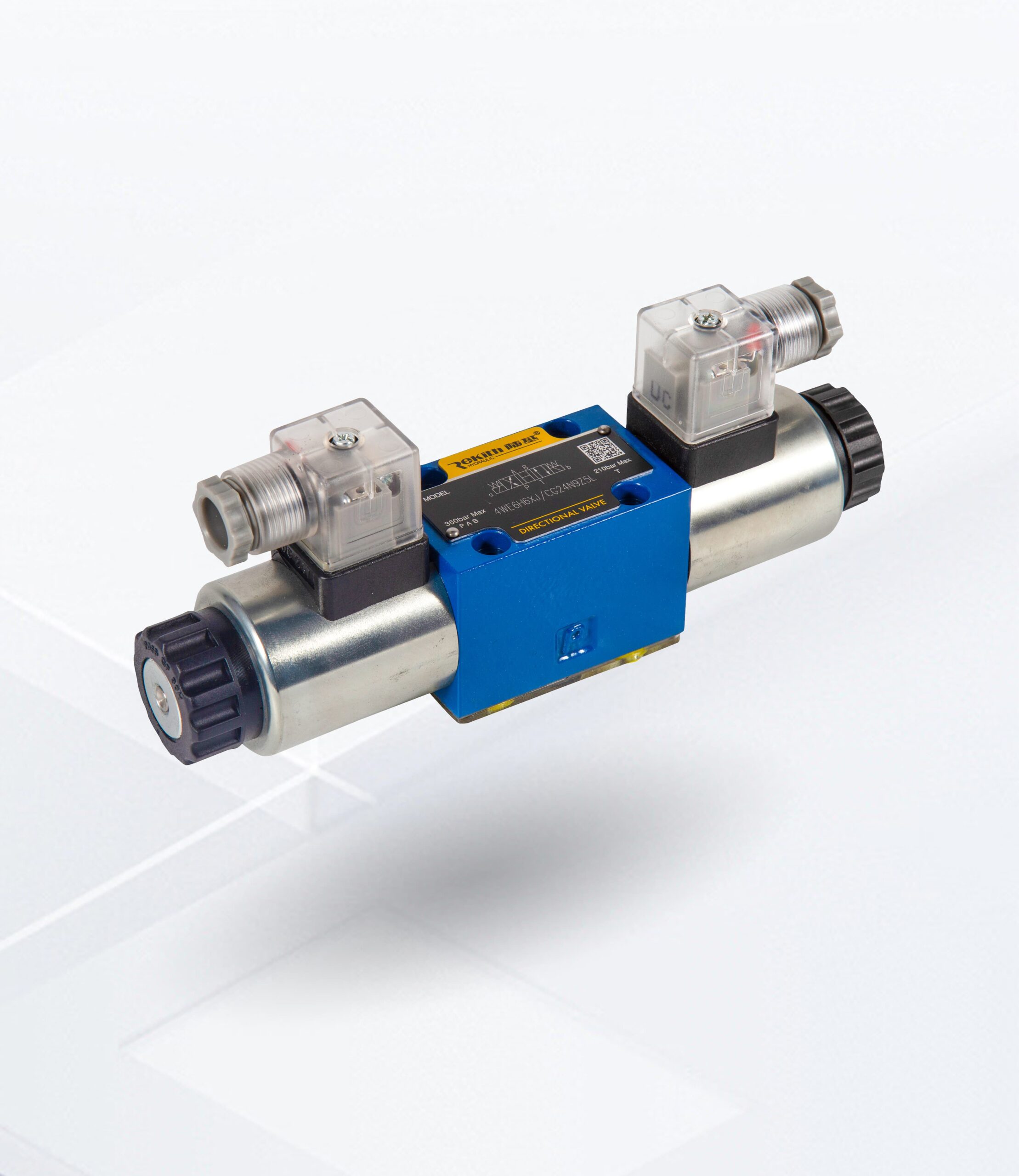
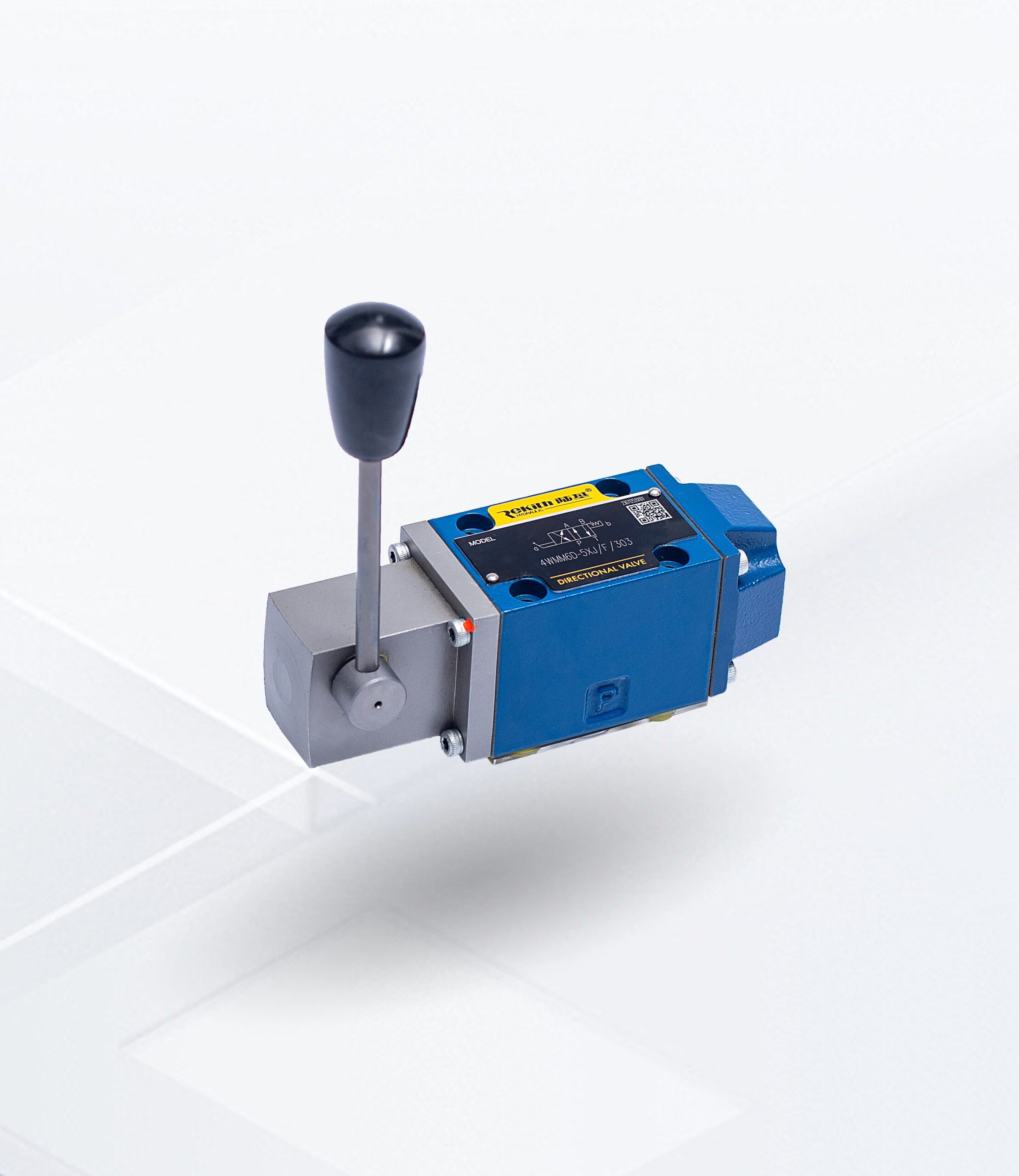
Directional valves typically use spool or poppet mechanisms activated by solenoids, manual levers, pneumatics, or hydraulic pilots. A common 4/3 directional valve has four ports and three flow states.
Advantages:
- Low cost, widely used
- Simple control, easy maintenance
- Ideal for stable-load and fixed-cycle systems
Limitations:
- Lacks fine flow regulation, risk of hydraulic shock
- Limited adaptability to dynamic load conditions
Typical Applications: Conveyors, shearing presses, boom arm controls
Proportional Valves: High Response, High Precision, High Efficiency
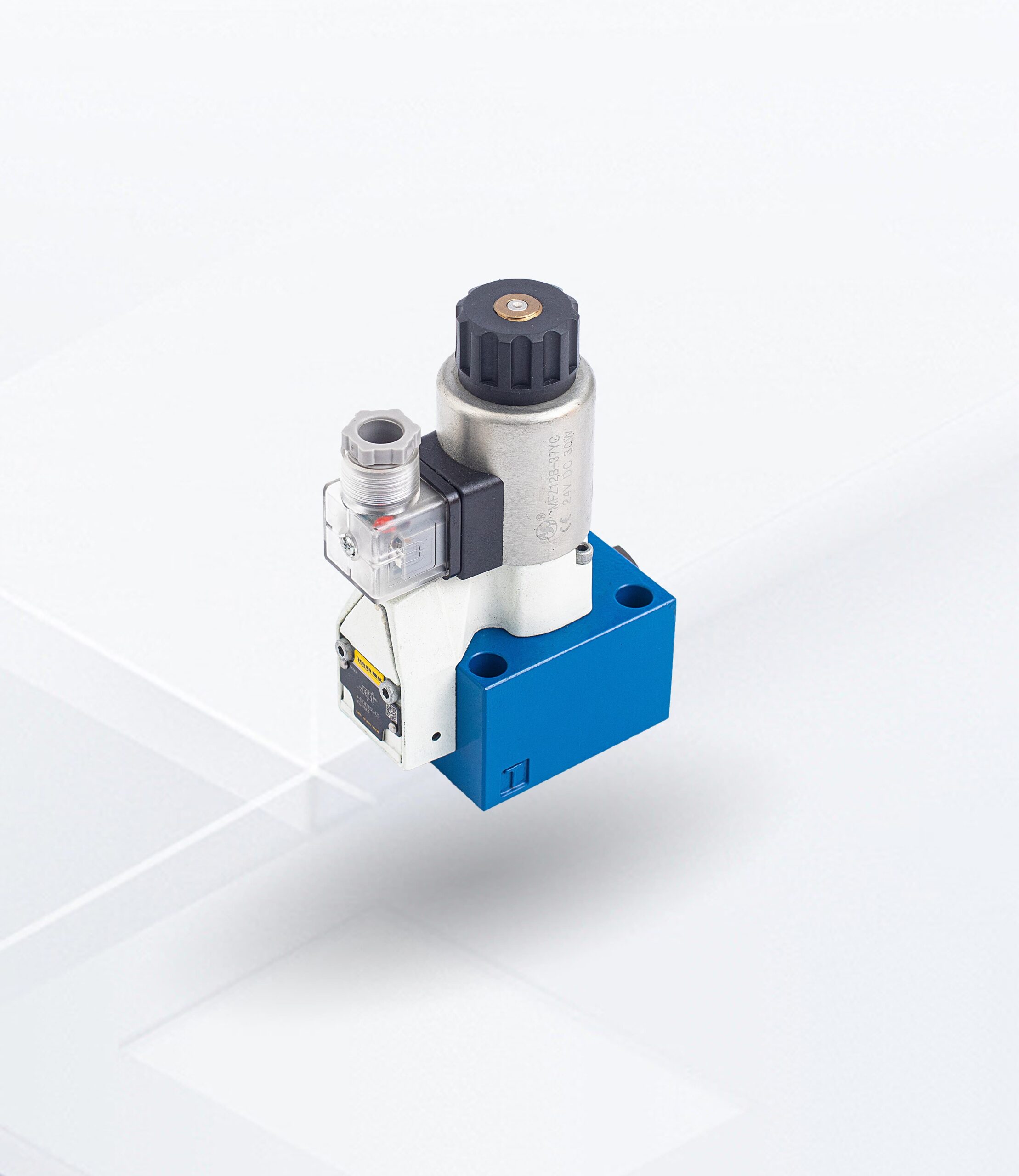
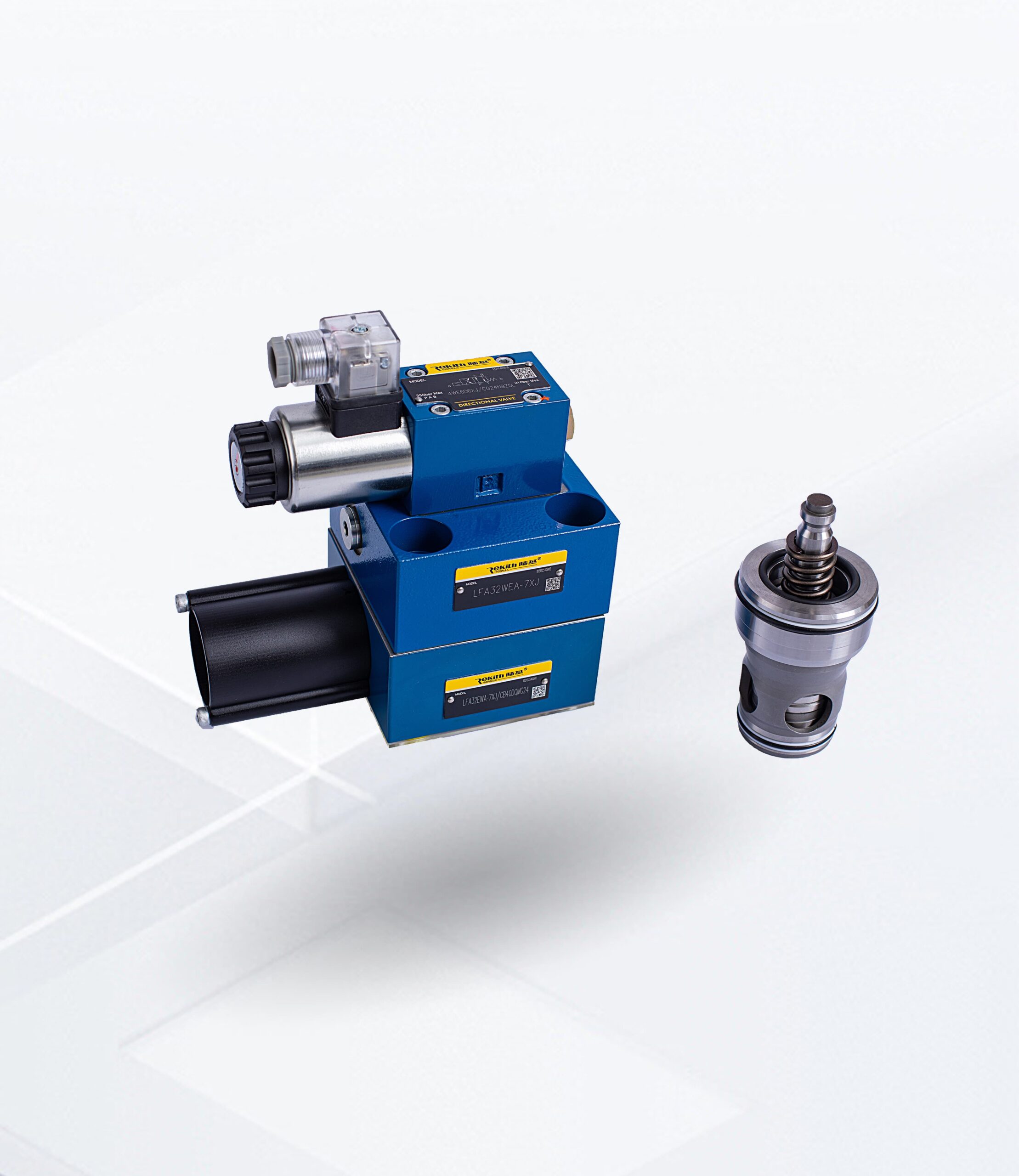
Proportional valves modulate electrical input to control magnetic force, precisely shifting the spool for smooth, variable flow and pressure control. Most high-performance models feature LVDT feedback systems for real-time accuracy.
Advantages:
- Smooth acceleration/deceleration, less shock
- Adapts to varying loads, improves efficiency
- Integrates with PLCs, sensors for closed-loop control
Applications: Injection molding, construction machinery, aerospace hydraulic systems, industrial automation
Performance Comparison Table: Which Valve Suits Your System Best?
| Parameter | Directional Valve | Proportional Valve |
|---|---|---|
| Control Mode | Binary switching | Continuously adjustable |
| Response Speed | Fast | Tunable via control signal |
| Energy Efficiency | Average | High (only delivers needed power) |
| Precision | Low | High (with feedback loop) |
| Cost | Low | Medium to High |
| Integration Complexity | Simple | Requires power, amplifiers, PLCs |
| Ideal Applications | Basic on/off systems | High-performance precision systems |
Case Study: How a Mobile Hydraulic System Achieved Energy Savings
In 2023, Rekith Hydraulics retrofitted a well-known brand’s mobile excavator with proportional valves. The original boom lift system used directional valves, resulting in jerky motion and high fuel consumption.
Results:
- Peak system pressure reduced by 18%
- Fuel efficiency improved by 12%
- Significantly smoother operation and enhanced user comfort
Maintenance Comparison: Proportional vs. Directional Valves
| Maintenance Factor | Directional Valve | Proportional Valve |
|---|---|---|
| Contamination Tolerance | High (wide tolerances) | Lower (ISO 19/16/13 required) |
| Service Cycle | Long, minimal maintenance | Regular calibration & diagnostics |
| Failure Rate | Low | Depends on oil quality & stability |
Recommendation: Proportional systems should include filter monitoring, oil alarms, and protected power supplies.
Selection Advice for Engineers
✅ Choose Directional Valves If:
- System is simple, cost-sensitive
- Loads are stable, control precision not critical
- No need for PLC or sensor communication
✅ Choose Proportional Valves If:
- You need precise speed/pressure control
- System operates under varying loads
- You aim for long-term energy savings and smoother performance
Conclusion: Intelligent Selection Balances Performance and Cost
Proportional and directional valves are not mutually exclusive but complementary technologies. In many advanced systems, hybrid usage is now standard—proportional valves in critical circuits, directional valves for secondary functions.
Understanding the principles, performance profiles, and application boundaries of each valve type allows engineers to build hydraulic systems that are more efficient, stable, and future-ready.
FAQs
Q1. What is the main difference between directional and proportional valves?
Directional valves operate in a binary fashion (fully open or closed), while proportional valves offer infinitely adjustable flow control. Proportional valves allow for precise regulation of flow rates and pressures, enabling smoother operation and more efficient energy use.
Q2. When should engineers choose directional valves over proportional valves?
Directional valves are ideal for applications requiring simple on/off control, uncomplicated operation sequences, and stable load conditions. They are also a good choice for cost-sensitive projects where precise flow modulation isn’t critical.
Q3. What are the key benefits of using proportional valves in hydraulic systems?
Proportional valves offer smooth acceleration and deceleration, reduce system shock and pressure spikes, optimize energy consumption, and enable precise control of actuator position and speed. They are particularly valuable in applications requiring sensitive movement control and variable load management.
Q4. How do proportional valves adjust flow rates?
Proportional valves use carefully designed spools with metering notches that gradually increase or decrease the flow area in response to varying electrical inputs. They often incorporate internal position feedback mechanisms, like Linear Variable Differential Transformers (LVDTs), to maintain exact flow rates regardless of pressure fluctuations.
Q5. What factors should be considered when choosing between proportional and directional valves?
Engineers should evaluate performance requirements, cost trade-offs, system complexity, integration needs, maintenance considerations, and specific application demands. While proportional valves offer greater precision and flexibility, they typically require a higher initial investment and more complex control systems compared to simpler directional valves.
About the Author
Michael Qiu is a Senior Hydraulic Systems Engineer at Rekith Hydraulics with 15 years of experience in industrial and mobile applications. He specializes in circuit design, energy optimization, and diagnostic engineering.
References:
- Bosch Rexroth Directional Valves Product Manual (2023)
- Moog Proportional Valve Application Guide (2022)
- ISO 10770-1, ISO 4413, ISO 4406 International Standards
- Parker Hannifin Hydraulic Component Selection Guide (2022)