
Introduction — Why Check Valves Are Fundamental in Fluid Systems
In piping systems for fluids and gases — whether intended for industrial use, water distribution, wastewater treatment, or hydraulic or pneumatic circuits — the direction of flow is often as important as the volume or pressure of the flow. A check valve is also referred to as a non-return valve, a one-way valve, or a backflow prevention valve. It has a significant role in maintaining this control.
The core of the check valve is a directional sensor that checks to see if the fluid is flowing in one direction or if it is trying to reverse its flow. If the sensor detects this, the valve automatically closes to prevent backflow.
This automatic, passive attribute — not requiring manual or mechanical control — makes check valves essential for maintaining system stability, protecting equipment, preventing contamination, and ensuring safe, predictable behavior across a broad range of applications.
In this article, we discuss:
- The mechanism by which check valves function — how they are structured.
- The primary goals and benefits they have in regards to fluid systems.
- The different types of check valves and how they differ.
- Where and why are check valves utilized: common applications and industries.
- Selection criteria: how to choose the appropriate check valve for a particular system.
- Common objections, potential problems, and the best way to consider practice.
Understanding the purpose and proper procedure of check valves is crucial to any professional in the engineering or maintenance industry who is designing or overseeing fluid or gas systems.
If you’re looking for a concise explanation of what a check valve is and why it is used, start here:
→ Purpose of a Check Valve Explained
How Does a Check Valve Work? The Mechanics Behind the Device
The fundamental components and their operations are described in this section.
A check valve is typically composed of two openings: an entrance and an exit. Fluid is admitted through the entrance; if the flow continues forward, the valve will open and allow the passage of the fluid. If the flow volume is stopped or reversed (a pressure differential from the outlet to the inlet), the mechanism that closes the valve will seal the valve, preventing the flow from returning.
The initial and final scenes typically require the dynamics of fluid pressure (a differential pressure across the valve) plus one of several mechanisms for closing that are dependent on gravity, spring force, or simply the pressure differential. The closure member is forced to its seat by this pressure differential.
One important factor is the “cracking pressure” (or “opening pressure”), which is the minimum pressure difference required to crack the seal and let fluid pass. If the upstream pressure is not greater than this threshold, the valve will remain closed.
Once the flow volume is below this threshold (or reversed), the valve will shut off – the internal component (disc, ball, piston, etc.) returns to seal the chair, preventing the return of flow. In many instances, the closure is rapid in order to minimize the reverse flow or pressure surge.
Different Methods of Check Valves — How do Variations in Design Help Different Activities?
Check valves have multiple different structural types, each designed to operate in a different flow regime, pressure range, media type, and piping configuration. Common variants include:
Check valves that are hinged-disabled — a disc will swing open in the forward direction, and it will shut down under backflow or pressure reversal. Helpful in high-intensity, low-pressure applications like water distribution.
Ball check valves: a spherical ball is released from its seat by forward pressure, then returns to its seat by reverse pressure. Often employed in smaller pipelines, pumps, or where compactness and simplicity are of paramount importance.
Lift/piston check valves – a disc or piston that lifts under forward pressure, then falls to close under reverse flow. Adept at high pressure and occasionally vertical orientation.
Diaphragm, duckbill, or elastomeric check valves- these valves utilize flexible membranes or elastic panels to facilitate flow in one direction and to seal on the other side- often found in low-pressure, sanitary, or medical applications.
Specialty and silent shut-off valves – these valves are designed to reduce the closing shock or water pressure surge (pressure surges) by controlling the speed of closure, sometimes via a spring or damper.
Each type has benefits and drawbacks associated with it: the flow resistance, pressure drop, the capacity for fluids (liquids, gases, slurries), the speed of closure, the maintenance required, and the cost. The proper choice of this equipment is dependent on the conditions in which it is used.
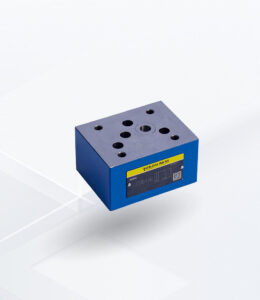
The Primary Purpose of a Check Valve — Preventing Backflow and Ensuring Unidirectional Flow
Avoiding the Reverse flow and Backflow Protection.
The primary function of a check valve is to prevent the flow of reverse fluid (backflow) in a piping system. Reverse flow can have serious consequences: the media in the upstream direction can be contaminated, the fluid in the upstream direction can be mixed, the pump or compressor can be damaged, the suction line can be lost, or safety risks can be present.
For instance:
In a water distribution system, a check valve prevents wastewater or polluted water from returning to the clean source.
In a pump-based system, once the pump is no longer functioning, fluid could backflow and starve the pump; this would lead to damage or other issues. A check valve located at the pump’s output prevents this.
In multi-pump systems or complex plumbing networks, check valves on each branch or line are positioned to prevent a single direction of flow when both pumps or lines are active or idled.
In general, check valves function as a passive safeguard that prevents fluid from accidentally returning or causing damage to the system or equipment, respectively.
Avoiding Water’s hammer and pressure surge.
Another significant purpose is to mitigate the water hammer (hydraulic shock) and pressure surge that occur when flow is suddenly stopped or reversed. When the flow direction changes suddenly (e.g., the pump is shut off), the momentum of the fluid can cause severe pressure increases, which can adversely affect the pipelines, valves, seals, or other connected devices.
If a check valve that is properly selected — especially a ” silent ” or dampened type of check valve — is employed, the closing of the valve will cushion the rotation, which will reduce the magnitude of the shock. This shields downstream and upstream components, extends their lifespan, and decreases the likelihood of failure or maintenance.
Avoiding Corruption or Diversity — Media Protection against Integrity
In systems that require different fluids or gases to be isolated – for example, in chemical processing, water treatment, or multi-line distribution – a check valve is employed that prevents back-migration, which prevents contamination or mismating.
This function is essential, for example, in the supply of potable water, the treatment of wastewater, chemical plants, or any other system that involves multiple media flows (gases, liquids, slurries).
Maintaining pressure, initializing pumps, and system stability
In pump and hydraulic systems that involve suction or priming, check valves are responsible for maintaining the pressure of the system when the pump is stopped. This prevents the system from draining and preserves the prime or vacuum conditions. This facilitates a dependable restart and shields pumps from damage caused by running without water or counterrotation.
Similarly, in applications that recover condensate, the trap must have a check valve that prevents the reverse flow of condensate or flash steam. This reduces the stress on the system and avoids the potential for water to be hammered or flown back towards the source.
As a result, check valves are occasionally employed not only as a single-time safeguard, but also as a component that continues to stabilize the system.
Broader System-Level Benefits: Safety, Efficiency, Maintenance Reduction
Beyond immediate control of the flow, check valves have multiple long-term benefits that make them important in the industrial and municipal piping systems.
Protection of equipment and long life
Because check valves prevent flow reversal, they safeguard critical machinery—pumps, compressors, filters, meters—from being subjected to flow reversal, back-pressure, or dry conditions. This decreases the mechanical damage, avoids overzealous stress, and increases the life of expensive machinery.
In industries that require chemicals, oils, or power, a check valve can prevent the backflow of chemicals or oils that could damage the entire process to be damaged or lead to safety issues.
Integrity and compliance with the process
When fluids contain substances that are contaminants, chemicals, or hazardous, preventing backflow is crucial to maintaining environmental safety, standards, and regulations. A check valve functions as a passive, always-present barrier to prevent contamination – no reliance on supervision or human intervention.
In water systems for municipalities or waste management, check valves serve to prevent the flow of contaminated or siphon lines; this is of great importance to public health.
Reduced Maintenance and Automated Protection
Because check valves are automatic and have a minimal amount of external assistance (no external actuation is necessary), they need minimal supervision from the operator. Once they’re installed correctly and chosen correctly, they consistently operate, reducing the need for manual intervention or controls.
This reduces the complexity of the system, decreases the potential for failure (no control wiring, no actuators), and decreases the long-term maintenance costs.
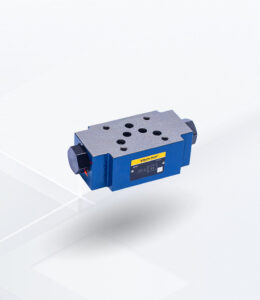
Typical Applications of Check Valves — Where and Why They Are Used
Check valves are commonplace—from small-scale domestic systems to large-scale industrial facilities. Here are common scenarios that are employed in different areas:
Water Supply, Plumbing, and Municipalities
Drinking water transport: inhibits reverse flow and pollution.
Wastewater and sewage: avoid the reverse flow, prevent the sewage from returning to the earth.
Irrigation and sprinkler systems: maintain the direction of water; prevent the hose or line from draining when the pump is inactive.
Pump Systems – Water, Oil, Chemical, and hydraulic
Suction and discharge lines: promote proper flow, prevent backflow, and protect the pump from turning counter-clockwise.
Multiple-pump or shared-line configurations: prevent inactive pumps or lines from drawing in the flow.
Chemical and industrial fluid transport: prevent combination, cross-contamination, or pressure buildup in process systems.
Steam, Condense, HVAC, and Other Industries
Steam traps, condensate collectors, and water pumps: these devices prevent the return of condensate, avoid water hammer, and maintain a balanced pressure.
HVAC and fluid-circulation systems: ensure that fluid flow is unidirectional, specifically when multiple branches or return flows are present.
Oil and Gas, Petrochemical, Chemical Engineering
Pipeline safeguard: one-way flow of oil, chemicals, and fuels; prevents the return of pollution or contamination to streams.
Pressure systems, high-powered pumps: Check valves prevent the flow of reverse pressure in the event of a shutdown or emergency.
Residential, Commercial, and Other Uses of Recycled Stone
appliances in the household (washing machines, dishwashers, sump pumps): these devices prevent drainage back or pollution.
Inflatable devices, air pumps: one-way valves prevent the escape of air or gas during inflation.
Backup systems, isolation valves in multi-media pipelines that require passive flow in one direction are necessary.
How to Select a Check Valve — Key Considerations and Specification Criteria
Selecting the appropriate check valve for your situation is not simple. The “erroneous” valve may cause leaks, pressure loss, malfunction, or damage. Crucial selection criteria include:
Fluidity / Media Similarity
Can you make sure the body of the valve and internal components (seat, ball, disc) are compatible with the fluid (water, oil, chemicals, gases, slurries, corrosion agents)? Materials may be cast iron, stainless steel, brass, plastic, elastomers, etc.
For media that is abrasive or has a high content of small particles, choose designs that can withstand debris (e.g., the ball check, the rubber seal check, and the swing check instead of the tight seat of the piston).
Pressure and Temperature Scores
Ensure the valve is capable of handling the maximum pressure and temperature of the system. High-pressure systems (pumps, steam, oil) may have a lift or piston that checks for opening.
Check the pressure that is breaking and make sure the operating differential pressure is greater than it; otherwise, the valve will not properly open.
The flow rate, flow direction, orientation, and type of valve
For pipelines that have a high flow rate and a large diameter, the swing or tilting-disc check valves are often more effective at reducing pressure drop.
For vertical patterns or oscillating flows, consider spring-loaded or lift-based check valves that are reliable regardless of the orientation.
Response Time, Closing Mechanisms, and Water Hammer Reduction
If the concern is reverse flow or pressure surge, choose “silent closing” or a spring-damped check valve to minimize water damage.
For slurries or fluids that contain solids, avoid quick-f closing valves that could collect debris or lead to seat damage.
Maintenance, Robustness, and Installation Considerations
Common designs (such as the ball check, spring check) typically need less maintenance and have a tendency to handle larger cyclic flows better.
Ensure the correct orientation (the flow direction arrow) — installation of this component backwards will negate its purpose.
For systems that require regular inspection or cleaning, accessible valve types or those with removable internal components are most preferred.
Specific standards and regulations that apply to specific applications
For water distribution, chemical, or gas utilization – verify that they comply with relevant regulations (e.g., the API, ANSI, ASME, AWWA, chemical-resistant specifications).
For systems that are sanitary or drinkable, the material used for the valves and the seals must have a health or hygiene reputation.
Summary: Why Check Valves Are Indispensable — Key Takeaways
A check valve promotes a single direction of flow, this prevents the opposite direction of flow and backflow, without the need for manual intervention or external assistance.
Its primary functions: to shield upstream components, to prevent contamination and media misfiring, to maintain proper pressure and consistency, to prevent sipping or drainage, and to contribute to safety and reliability in fluid systems.
This also assists in reducing pressure surges and water damage, if implemented correctly.
Check valves have applications in nearly every field of fluid engineering: water distribution, wastewater treatment, chemical processing, oil and gas, HVAC, pumping systems, hydraulic and pneumatic circuits, steam systems, and domestic plumbing.
The process of selection is dependent on the fluid type, pressure, and temperature, flow rate, orientation, material compatibility, and typically involves trade-offs between the flow resistance and the integrity of the seal and the reliability of the device.
Incorrect use or misplacement can lead to malfunction, leakage, ineffective systems, or damage, so care must be taken during the engineering process.
In short: a check valve can be considered a simple, passive component – but it plays a crucial role in maintaining the safety, reliability, and integrity of fluid systems.
This article focuses on engineering and system-level considerations. For a clear functional overview, refer back to:
→ Purpose of a Check Valve Explained: Function, Uses, and Benefits
Conclusion
For those involved in system design, maintenance, and procurement, recognizing the purpose of a check valve — beyond simply “closing a pipe in one direction” — is crucial. When properly installed and specified, a check valve becomes a silent protector, which prevents backflow, contamination, pressure increases, equipment damage, and operational problems.
In increasingly complex industrial, municipal, and process-fluid systems that have multiple pumps, diverging pipelines, varying media, and safety concerns, the check valve continues to be a significant, low-cost, and high-value component.
When designing or evaluating a fluid or gas system, identify the potential for reverse flow, the location of the pumps or compressors, the media that is mixed, or the pressure or priming needed, and consider where a check valve should be placed. In general, this type of scenario benefits from the proper utilization of a check valve. It reduces the frequency of maintenance, increases safety, and guarantees long-term reliability.