
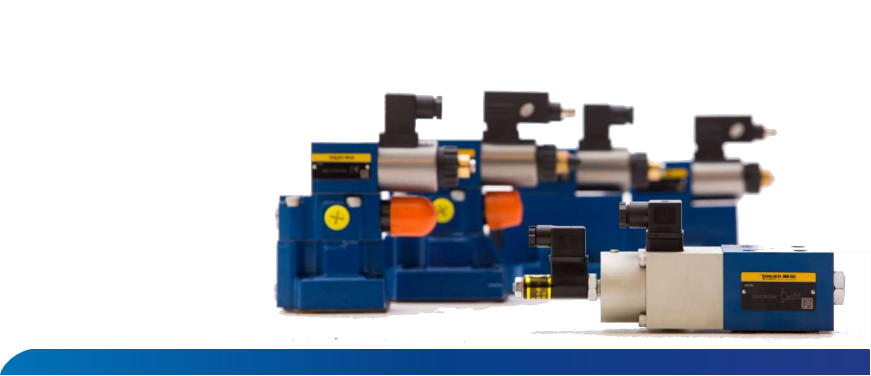
Proportional Valve vs Servo Valve: Best 5 Ways to Explain Key Differences
✍️ Author: James H. Liu, Senior Hydraulic Engineer at Rekith Hydraulics
Introduction
In the complex world of fluid power control, the choice of using a proportional valve or a servo valve has a decisive impact on the performance, accuracy, reliability and cost-effectiveness of the system. As technology continues to evolve, it is critical for engineers and system designers to understand the differences between the two valves in terms of structural symbols, control principles and application scenarios.
This article will deeply analyze the operating principles, advantages and applications of proportional valves and servo valves, and compare them in real scenarios to help readers make wise choices.
What is a proportional servo valve?
The proportional servo valve integrates flow control and directional control functions to achieve the start and stop and direction adjustment of the hydraulic system. Unlike traditional on-off solenoid valves, it accepts analog input signals and provides continuously variable control within a certain range. This method can smoothly increase voltage, reduce system pressure shock, and improve stability and responsiveness.

Looking for a Complete Proportional Valve Guide?
🔗 Explore the Full Hydraulic Valve Manufacturer Guide
Core structure and working principle
The key components of the proportional servo valve include:
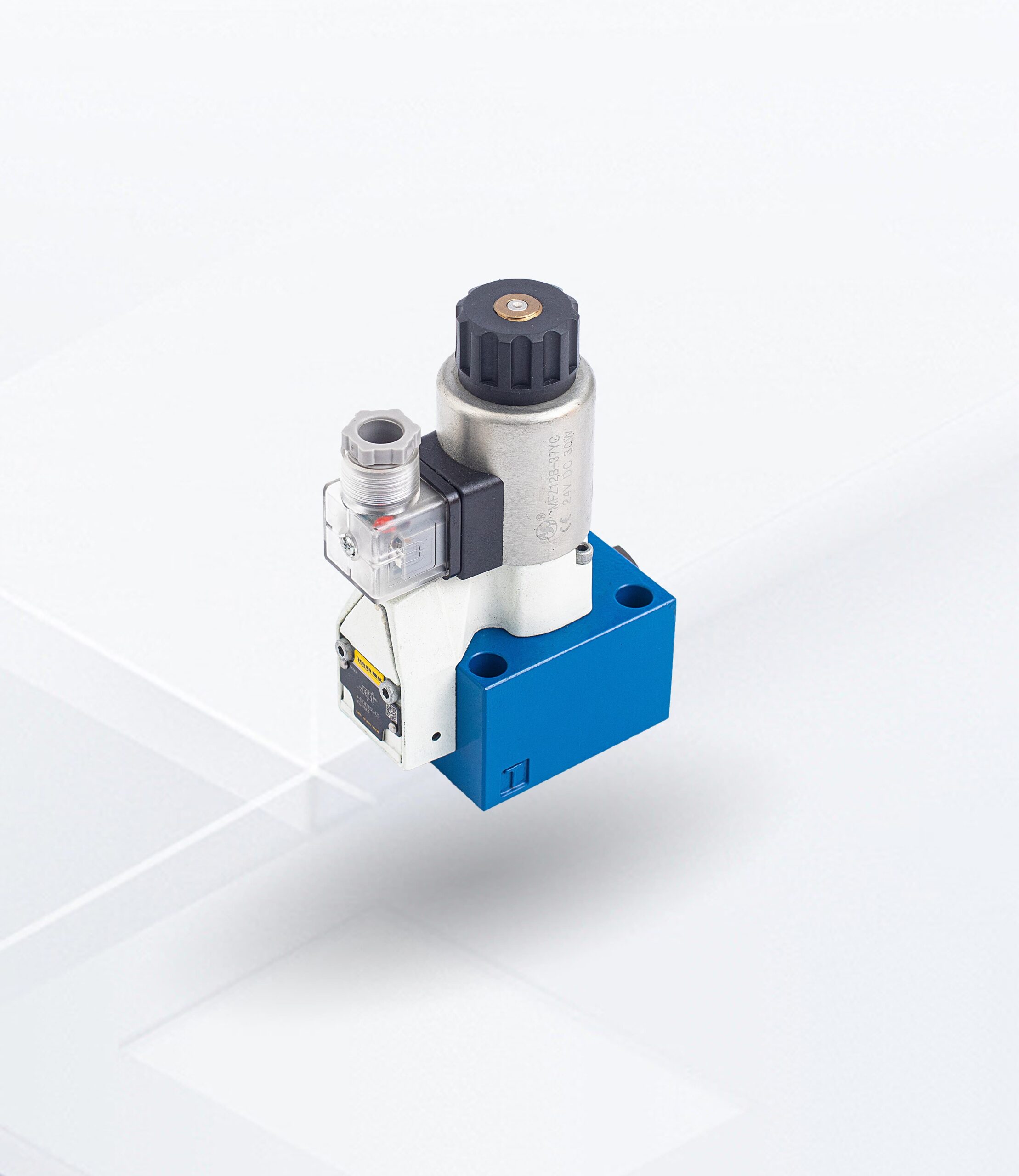
Solenoids: drive the spool to move;
Spool: control the fluid flow path;
LVDT feedback device: detect the spool position to achieve closed-loop control;
Dual solenoid control or pilot control configuration: allows flexible customization of control methods according to system requirements.
Feedback mechanisms such as LVDT (Linear Variable Differential Transformer) can accurately control the spool position, thereby achieving actuator action with high repeatability, stability and response speed, which is suitable for working conditions with frequent changes in external conditions.
Advantages of proportional servo valves
✅ Precise control
It can achieve precise adjustment of flow, pressure and actuator action, avoiding the impact and mutation caused by traditional valves.
✅ Multi-purpose adaptation
From aerospace to manufacturing systems, it is widely used in scenarios that require frequent adjustment or high-precision control, such as flight simulator pressure control, filling system flow regulation, etc.
✅ Excellent energy-saving performance
Through fine-tuning control, it reduces energy waste and operating costs, which is particularly suitable for modern equipment scenarios with high requirements for energy conservation and emission reduction.
Industry application scenarios
✈️ Aerospace
Control flaps, elevators, brake systems, etc. to meet the ultimate requirements of lightweight, high performance and safety.
Industrial equipment
Used in high-precision operating systems such as CNC machine tools and hydraulic presses to help improve processing consistency and efficiency.
Automotive industry
Precisely control brakes, suspension and steering systems to improve driving responsiveness and comfort.
Proportional valve vs. traditional servo valve comparison table
| Feature | Proportional Valve | Servo Valve |
|---|---|---|
| Control Signal | Analog (±10V) | Analog with mechanical/electronic feedback |
| Precision | Moderate to high | Very high |
| Response Time | Fast | Ultra-fast |
| Maintenance | Simpler | Requires specialists |
| Cost | Lower | Higher |
| Common Applications | Fluid handling, general motion control | Aerospace, CNC, automotive safety systems |
Frequently Asked Questions FAQs
Q: What are the main technical differences between proportional valves and servo valves?
A: Proportional valves usually use electronic feedback devices such as LVDT, which are suitable for continuous adjustment; servo valves use more sophisticated internal feedback mechanisms to provide faster and more accurate responses.
Q: Can proportional valves replace servo valves?
A: Proportional valves can replace servo valves in scenarios that do not require extreme response speed or ultra-high precision. For example, hydraulic machinery, packaging equipment, etc.
Q: How many types of proportional valves are there?
A: There are mainly three types:
Proportional directional control valve
Proportional pressure control valve
Proportional flow control valve
Q: What is the difference between ordinary overflow valves and proportional valves?
A: Ordinary valves rely on springs to set pressure and cannot be adjusted; proportional valves rely on current drive to achieve fine adjustment.
Need expert help in selection?
Welcome to visit Rekith Hydraulics official website and contact our engineering team to provide customized valve solutions for your hydraulic system:
About the author
James H. Liu is a senior hydraulic engineer at Rekith Hydraulics with 15 years of experience in proportional and servo control. He has rich experience in field commissioning and customer projects. He is the head of Rekith’s technical content team and is committed to technology communication and knowledge engineering construction.
Company introduction
Rekith Hydraulics has 20 years of experience in R&D and manufacturing of hydraulic control products. Its products cover multiple categories such as proportional valves, relief valves, throttle valves, etc., which are widely used in industrial equipment, construction machinery, transportation and other industries. We are committed to providing stable, efficient and sustainable hydraulic solutions to OEM customers around the world